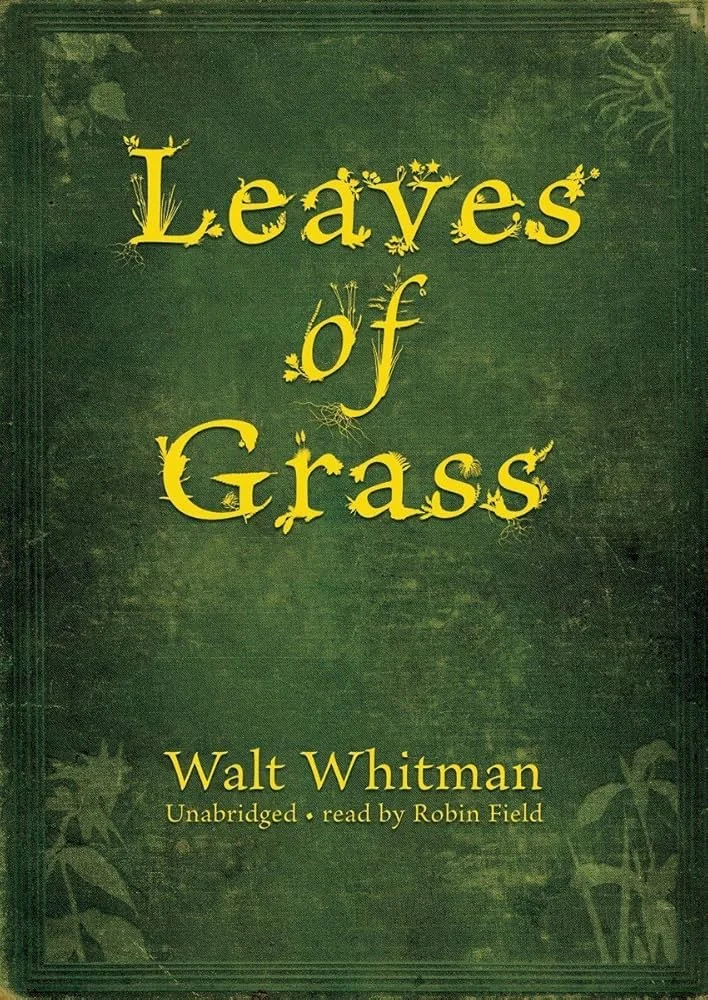
Walt Whitman’s Leaves of Grass is one of the most celebrated collections of American poetry, known for its bold free verse, sweeping vision of democracy, and profound humanity. While the first edition appeared in 1855, the work was not static; Whitman revised and expanded it throughout his lifetime, incorporating new experiences and insights.
One of the most transformative influences on the later editions was his time as a volunteer nurse during the American Civil War. Confronted daily with suffering, death, and extraordinary resilience, Whitman’s perspective deepened. The war years infused his poetry with greater compassion, an intimate understanding of mortality, and a heightened awareness of the human cost of conflict. His role as a caregiver left a lasting imprint on the evolving voice of Leaves of Grass.
From idealism to realism
In the early editions of Leaves of Grass, Whitman celebrated the body, the self, and the promise of American democracy with boundless optimism. His poems expressed faith in progress and the vitality of the young nation. However, the Civil War disrupted this vision. As Whitman encountered soldiers who were maimed, diseased, or dying, his poetic voice shifted. He no longer spoke only of idealized human potential but of the fragility of life and the brutal consequences of war. This transition from idealism to realism is evident in later poems, which carry both the gravity of lived suffering and the tenderness of empathy.
The hospital as a crucible of empathy
Whitman spent countless hours in military hospitals in Washington, D.C., visiting wounded soldiers, writing letters for them, bringing small gifts, and offering comfort. These encounters allowed him to see humanity at its most vulnerable. Rather than focusing on heroism or military glory, he paid attention to the quiet dignity of individuals enduring immense pain. The hospital became a crucible where Whitman’s poetic philosophy of interconnectedness was tested and refined. He began to see each soldier not as a faceless part of the war machine but as a brother whose suffering deserved acknowledgment and care. This profound empathy permeates the later sections of Leaves of Grass.
The Drum-Taps addition
The most direct outcome of Whitman’s war experience was the addition of the Drum-Taps poems to Leaves of Grass. Published in 1865 and later integrated into the larger collection, Drum-Taps includes poems such as “The Wound-Dresser,” “Vigil Strange I Kept on the Field One Night,” and “Dirge for Two Veterans.” These works capture the raw immediacy of the battlefield and the hospitals. “The Wound-Dresser,” for instance, reflects Whitman’s own role as a caregiver, describing in intimate detail the act of tending to soldiers’ injuries. The collection does not glorify war but instead meditates on its physical and emotional toll, demonstrating how Whitman transformed his personal experiences into art.
Death as a constant presence
One of the most significant ways the war shaped Whitman’s poetry was in his treatment of death. Before the war, death in Leaves of Grass was often presented as part of the natural cycle, something to be embraced as a return to the earth. After his hospital work, death became more immediate and haunting. The countless young men he saw dying prematurely forced him to confront mortality not as an abstract concept but as an everyday reality. Yet even in this grim context, Whitman retained a sense of transcendence, often depicting death as a passage to spiritual unity rather than an end. This balance of grief and acceptance enriched the philosophical depth of his poetry.
The personal toll on Whitman
Whitman’s work as a nurse was emotionally draining. He witnessed suffering on a scale few civilians could imagine, and the trauma left lasting scars on his health and spirit. Despite this, he continued to offer himself to the soldiers, believing that presence and kindness could make a difference. This personal sacrifice found expression in his poems, where the intimacy of caregiving becomes a metaphor for the bonds of humanity. The war tested Whitman’s ideals, but instead of abandoning them, he deepened them, acknowledging human suffering while still affirming the possibility of compassion and connection.
Poetry as testimony
For Whitman, writing was not just artistic expression but also testimony. His poems from the Civil War years bear witness to the experiences of soldiers whose voices might otherwise have been lost. By incorporating their stories into Leaves of Grass, Whitman ensured that the human cost of the war would be remembered. This act of poetic documentation reflects his democratic ethos: the lives of ordinary individuals were worthy of remembrance and dignity. His war poems stand as monuments not only to loss but also to the resilience and shared humanity he observed in the hospitals.
Lincoln and national mourning
The assassination of Abraham Lincoln in 1865 profoundly affected Whitman, inspiring some of his most famous elegiac poems, including “When Lilacs Last in the Dooryard Bloom’d” and “O Captain! My Captain!” These works, often included in later editions of Leaves of Grass, reflect a nation in mourning but also Whitman’s personal grief. His experience of tending to individual soldiers made the death of Lincoln feel emblematic of the collective suffering of the nation. By channeling both personal and public grief into poetry, Whitman expanded the scope of his work from the intimacy of the hospital ward to the symbolic loss of a leader.
The blending of physical and spiritual
Whitman’s nursing experience reinforced his tendency to blur the line between the physical and the spiritual. The act of washing wounds, dressing injuries, and holding hands at the bedside became, in his poetry, sacred acts. He treated the human body not merely as flesh but as a vessel of dignity and connection. This perspective resonates throughout Leaves of Grass, where physical intimacy often parallels spiritual communion. The war intensified this theme, demonstrating that even amid suffering and death, there was potential for profound human connection that transcended pain.
A deepened democratic vision
Before the war, Whitman envisioned democracy as an expansive, almost abstract ideal. After his service as a nurse, democracy became grounded in the lived experiences of individuals. Every soldier he tended to, regardless of background, represented a thread in the larger fabric of the nation. This recognition of shared humanity strengthened his belief that democracy was not just a political system but a moral and spiritual reality built on empathy and solidarity. His later poetry reflects this broadened vision, presenting America not as a concept but as a community bound together by care and sacrifice.
The wound-dresser’s legacy in poetry
Whitman’s Civil War nursing transformed Leaves of Grass from a work of exuberant celebration into one of profound empathy and testimony. By confronting suffering directly, he expanded the scope of his poetry to include the realities of war, the intimacy of caregiving, and the depth of national grief. His role as the “wound-dresser” was not only a literal act of service but also a metaphor for his poetic mission: to tend to the wounds of the human spirit through words. The experience left an indelible mark on his poetry, ensuring that Leaves of Grass would stand not only as a celebration of life but also as a record of resilience, compassion, and shared humanity.