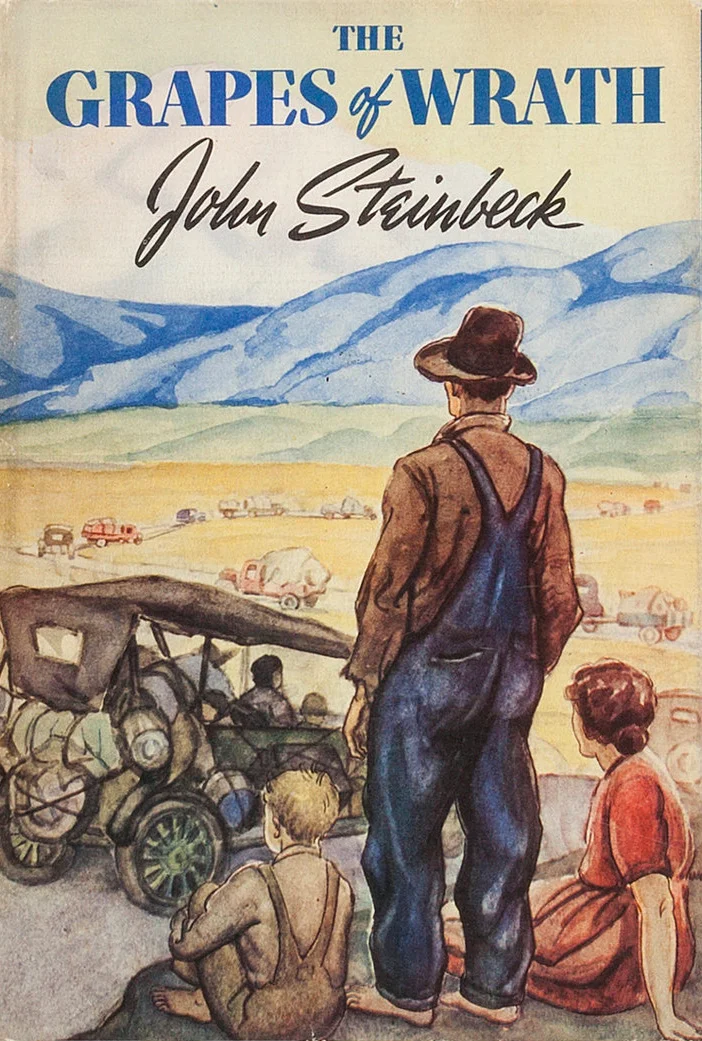
When John Steinbeck published The Grapes of Wrath in 1939, it quickly became one of the most powerful depictions of the Great Depression and the Dust Bowl migration. Just one year later, director John Ford adapted the novel into a film that remains a landmark in American cinema. Although the movie was shaped by the political climate of its time, it continues to resonate with contemporary audiences.
Its themes of displacement, resilience, injustice, and community echo across decades, offering insights into modern struggles of migration, inequality, and survival. The film’s relevance today rests on both its faithful translation of Steinbeck’s vision and its ability to capture universal human experiences that transcend its historical moment.
Depicting economic hardship on screen
The 1940 film translates Steinbeck’s stark portrait of economic collapse into powerful visual language. Audiences see the dust-choked Oklahoma farms, the overcrowded migrant camps, and the weary faces of the Joad family as they head west in search of work. This imagery continues to resonate in an age marked by global recessions and widening inequality. The portrayal of families forced to uproot their lives for survival mirrors the struggles of contemporary workers displaced by automation, climate change, or economic instability. By showing the material consequences of systemic failure, the film remains an urgent reminder of the human cost of economic upheaval.
Migration as a timeless theme
One reason the film endures is its treatment of migration. The Joad family’s journey from Oklahoma to California parallels the journeys of countless displaced people today, from climate refugees to migrants fleeing conflict or poverty. The film portrays migration not as a choice but as a necessity for survival, a theme that still defines global headlines. Audiences watching today can draw direct connections between the Joads’ plight and the contemporary challenges faced by refugees at national borders, underscoring the universality of migration stories.
Human dignity amid adversity
Central to the film is the idea of preserving dignity when material security is stripped away. The Joads, though destitute, retain their sense of humanity through family bonds and solidarity with fellow migrants. This theme continues to resonate in societies grappling with homelessness, precarious labor, and social exclusion. In modern cities where wealth and poverty exist side by side, the film’s insistence that dignity persists even under crushing hardship is both radical and deeply relevant. By humanizing the poor, Ford’s interpretation challenges viewers to reconsider how society treats its most vulnerable members.
Ford’s realism and artistic restraint
Unlike some adaptations that dilute the social message of their source material, John Ford’s film embraces a realist style that emphasizes authenticity. Filmed in black and white, the stark cinematography reinforces the bleakness of the Joads’ world while also conveying a kind of documentary truth. Ford resisted melodrama, allowing the characters’ struggles to speak for themselves. This artistic restraint gives the film enduring credibility. In an era of cinematic spectacle, its realism reminds viewers that powerful storytelling often emerges from simple, unembellished human experience.
The political climate of the 1940s
When released, the film faced controversy for its depiction of labor exploitation and systemic inequality. Critics on the political right feared it promoted socialist ideas, while some on the left argued it softened Steinbeck’s sharper critique. Yet Ford’s interpretation, while less radical than the novel, preserved its core message of injustice. The debates surrounding its release mirror contemporary discussions about the role of art in addressing political issues. Today, when films continue to spark controversy over their portrayal of race, class, or migration, The Grapes of Wrath demonstrates how art can provoke dialogue without losing sight of human stories.
Women’s resilience in focus
One of the most enduring figures in both the novel and the film is Ma Joad, whose strength anchors the family. Jane Darwell’s performance captures the quiet resilience of women who hold families together in times of crisis. Her famous line—“We’re the people that live. They can’t wipe us out, they can’t lick us”—remains one of the most powerful affirmations of human endurance in film history. Today, in the wake of global crises where women often bear the brunt of caregiving and economic hardship, her role feels strikingly relevant. The film continues to honor women’s resilience as essential to collective survival.
The collective over the individual
Unlike many American narratives that celebrate individualism, The Grapes of Wrath emphasizes collective struggle. The Joads survive through cooperation with other migrants, and the film stresses that systemic problems require collective solutions. This resonates with modern debates about labor rights, healthcare, and environmental justice, where individual effort alone cannot solve structural inequalities. The film reminds viewers that resilience lies in solidarity, not isolation, a lesson increasingly vital in a globalized world facing shared challenges.
Environmental warnings
The Dust Bowl setting underscores the link between environmental catastrophe and human displacement. Ford’s film vividly shows how ecological mismanagement—combined with economic structures—forced families off their land. In today’s era of climate change, the images of barren farms and mass migration carry prophetic weight. The story anticipates current discussions about climate refugees and the social consequences of ecological collapse. By revisiting the film, audiences gain a historical lens through which to understand the present climate crisis.
Continuing relevance in modern culture
The film’s themes continue to surface in popular culture, from novels and films about migration to documentaries on inequality. Its influence can be seen in works like John Sayles’s Matewan or Ken Loach’s explorations of working-class struggles. Its insistence on realism, solidarity, and dignity has shaped how later filmmakers approach social issues. Contemporary audiences rewatching Ford’s film may find that its black-and-white imagery speaks with greater clarity than ever, unclouded by nostalgia, because the problems it depicts remain unresolved.
A film that speaks across time
The Grapes of Wrath film adaptation remains relevant not because it is a relic of the past, but because it illuminates ongoing struggles with poverty, migration, and injustice. John Ford’s interpretation distilled Steinbeck’s message into images that continue to resonate: the battered truck carrying hope westward, the weary faces of workers searching for fairness, and Ma Joad’s defiant assertion of endurance. By humanizing the consequences of systemic failure, the film transcends its historical moment to speak to ours. Its continued relevance testifies to the enduring power of cinema to confront hardship with honesty, empathy, and resilience.