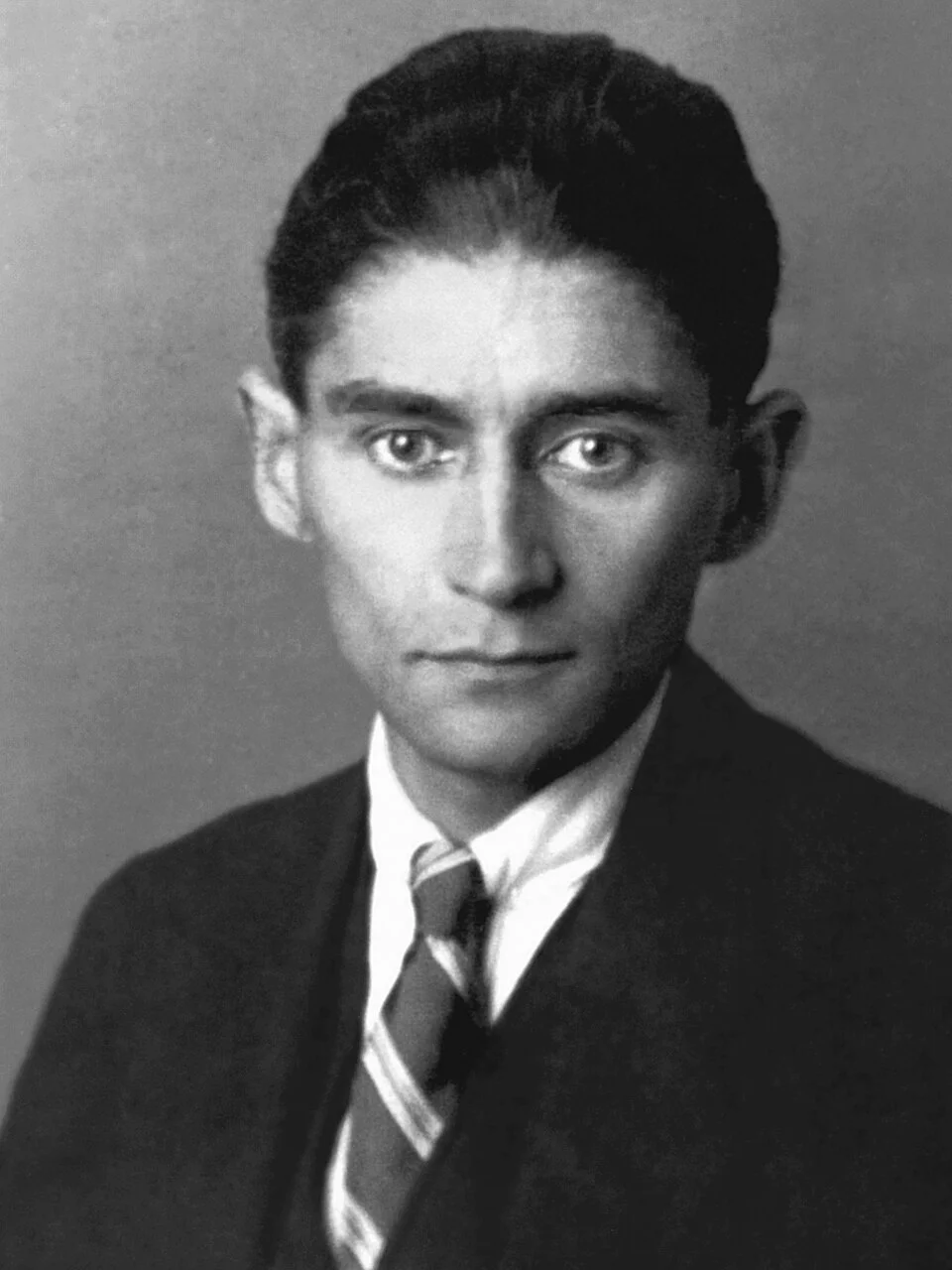
Franz Kafka’s The Trial, published posthumously in 1925, remains one of the most chilling examinations of modern life. Its protagonist, Josef K., is arrested one morning without being told the nature of his crime, and the novel follows his futile attempts to navigate a vast, incomprehensible judicial system.
While the story is filled with surreal elements, the true source of dread comes from Kafka’s portrayal of bureaucracy itself. Endless paperwork, faceless officials, and the uncertainty of unseen rules combine to generate a deep sense of fear. Bureaucracy, in Kafka’s hands, is not simply a background setting—it becomes the mechanism of terror, the invisible force that corrodes both freedom and identity.
The arrest without explanation
From the very first chapter, Kafka uses bureaucracy to instill unease. Josef K. is arrested without being told the charges against him, a detail that embodies the irrational nature of the system. In modern states, bureaucracy is often associated with structure and legality, but here it becomes a tool of arbitrariness. The absence of explanation creates fear because it denies K. the possibility of understanding the rules of his own situation. This lack of clarity is more frightening than violence, since it traps him in a world where every decision is governed by invisible regulations that he cannot grasp.
The labyrinth of officials and clerks
Kafka’s bureaucracy is not a single office or institution but a vast labyrinth populated by countless clerks, officials, and minor judges. Each appears to have limited power, yet all collectively enforce the incomprehensible system. K. encounters them in strange courtrooms hidden in attics and in endless files of documents whose purpose is never explained. This proliferation of minor figures emphasizes how faceless the system is: no single authority can be confronted, and no single person carries responsibility. The terror lies in the fact that power is dispersed, making resistance impossible. Bureaucracy becomes a hydra with infinite heads, each one interchangeable and untouchable.
Endless procedures as punishment
Another way Kafka creates fear is by showing how bureaucracy transforms procedure into punishment. K. is not physically tortured, yet his life becomes consumed by hearings, meetings, and paperwork that seem to lead nowhere. The trial does not move toward resolution but drags on indefinitely, consuming his energy and identity. In this sense, bureaucracy itself becomes the penalty. The very act of being caught in its gears—waiting, complying, submitting forms—is a form of suffering. Kafka exposes the terrifying possibility that justice systems can operate without verdicts, relying instead on the endless draining of human will through procedural entanglement.
The language of authority
Language is another tool through which bureaucracy inspires fear. Officials in The Trial often use vague or contradictory statements, leaving K. uncertain about what they truly mean. Legal jargon, official titles, and vague threats create a constant sense of intimidation. Words that should clarify instead obscure. Kafka shows how bureaucracy manipulates language to reinforce power: once words lose transparency, they can be wielded to dominate those who depend on them for survival. For K., every phrase spoken by a clerk or judge becomes a trap, a reminder that authority communicates in a code outsiders can never fully decode.
The hidden spaces of bureaucracy
Kafka situates many of K.’s encounters with the judicial system in hidden, suffocating spaces: overheated attic courtrooms, dusty offices, and claustrophobic apartments. These settings reinforce the sense that bureaucracy is everywhere yet nowhere visible in its entirety. It seeps into private spaces and ordinary buildings, lurking in corners where one least expects it. Fear arises from the realization that one cannot escape; the system is embedded in the very fabric of the city. The blurring of public and private space reveals how bureaucracy, once unleashed, infiltrates every domain of life, stripping individuals of a safe refuge.
The loss of individuality
Perhaps the most frightening aspect of bureaucracy in The Trial is its reduction of individuals to files and cases. Josef K. ceases to be a person with unique qualities; he becomes a defendant, a name on a document. Kafka highlights the dehumanizing effect of bureaucratic systems that prioritize forms and records over lived experience. Fear arises not from physical violence but from the slow erasure of individuality. K.’s inability to assert his humanity against the machinery of the court reflects a profound anxiety about modern life: that in vast bureaucracies, the human being becomes invisible, lost among endless paperwork.
Bureaucracy as fate
Kafka’s portrayal of bureaucracy resonates with mythological ideas of fate. Just as the Greeks imagined mortals trapped by destinies woven by the gods, Kafka presents bureaucracy as an impersonal destiny from which there is no escape. The system seems to exist for its own sake, with no higher authority or ultimate logic. Josef K. cannot appeal to fairness or reason because the system is beyond such human concerns. The fear comes from confronting an order that is both all-powerful and meaningless, an endless process without purpose. Bureaucracy becomes a secular version of fate, replacing divine judgment with the mechanical operations of paper and procedure.
The final execution
The climax of the novel, where Josef K. is executed “like a dog,” demonstrates the ultimate power of bureaucracy. Even at the moment of death, he still does not know the charges against him. The fear here does not come solely from the act of execution but from the recognition that the system has consumed him entirely without ever explaining itself. His life is extinguished not by personal enemies or visible tyrants but by an impersonal process. Kafka suggests that in such a system, death itself is bureaucratized, reduced to the final entry in an endless chain of meaningless procedures.
The modern resonance of Kafka’s bureaucracy
K.’s struggle in The Trial resonates with modern readers because bureaucratic institutions remain central to contemporary life. Government offices, corporate structures, and administrative bodies often create similar feelings of powerlessness and confusion. Kafka’s insight lies in exposing how fear arises not from visible brutality but from faceless systems that govern individuals without transparency. In The Trial, bureaucracy becomes more terrifying than physical force because it cannot be resisted, negotiated with, or understood. It is both everywhere and nowhere, an invisible architecture of control that leaves individuals trapped in perpetual uncertainty.
Bureaucracy as the architecture of dread
In The Trial, Kafka turns bureaucracy into the very architecture of fear. It thrives on vagueness, delays, and anonymity, stripping individuals of clarity, identity, and hope. Josef K.’s helpless struggle illustrates how terror emerges not from violence but from the suffocating embrace of endless procedures. By depicting bureaucracy as a machine that feeds on uncertainty, Kafka captured one of the defining anxieties of modern existence: the dread of being trapped in a system too vast, too faceless, and too incomprehensible to ever escape.