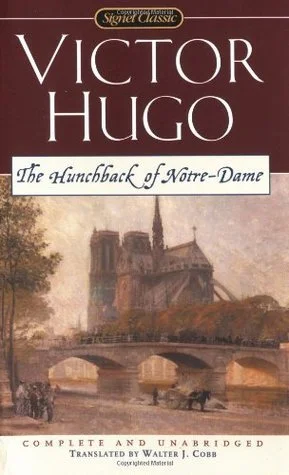
Victor Hugo’s 1831 novel The Hunchback of Notre Dame is remembered for its tragic characters—Quasimodo, Esmeralda, Claude Frollo—but equally for the monumental backdrop against which their stories unfold: the cathedral of Notre Dame itself. Unlike most settings in literature, the cathedral is not a neutral stage.
It functions as a character, a historical archive, and a symbol of continuity amid human transience. Hugo’s use of architecture was both aesthetic and political, part of his campaign to draw attention to the endangered Gothic heritage of France. Through the cathedral, Hugo interwove themes of time, society, and human destiny, transforming architecture into narrative substance.
The cathedral as a living character
Notre Dame is more than stone; in Hugo’s hands, it breathes with life and presence. The novel devotes long passages to describing its towers, portals, gargoyles, and stained glass. This detail elevates the building into a living character that influences the lives of those within it. For Quasimodo, the cathedral is home, parent, and sanctuary. He knows its staircases, bells, and hidden passages intimately, almost as if the structure and his own body are intertwined. For Esmeralda, by contrast, the cathedral becomes a prison, reminding readers that architecture can both protect and confine. By treating Notre Dame as a character, Hugo reveals how human destinies are entangled with the spaces they inhabit.
A symbol of cultural memory
Hugo wrote the novel during a time when many Gothic buildings in Paris were threatened with neglect or demolition. By describing Notre Dame in almost archaeological detail, he preserved cultural memory through literature. The cathedral symbolizes the endurance of history across centuries, holding within its stones the stories of monarchs, priests, peasants, and revolutionaries. In one sense, the novel is a plea for preservation: Hugo feared that without attention, France’s architectural heritage would crumble, taking with it a vital link to the past. Thus, architecture in the novel functions not just as a backdrop but as a repository of civilization itself.
Architecture as a language
One of Hugo’s most famous reflections in the novel is the idea that architecture is a kind of book. Before the invention of the printing press, he argues, architecture was humanity’s primary means of recording thought and belief. Cathedrals, in particular, were “books of stone,” telling stories through carvings, sculptures, and stained glass. In Hugo’s words, “This will kill that” refers to how print would eventually replace architecture as the dominant medium of communication. By framing Notre Dame as a narrative text, Hugo encourages readers to “read” its design and ornamentation as chapters in the story of humanity’s spiritual and cultural evolution.
The Gothic aesthetic and human drama
The Gothic style of Notre Dame, with its pointed arches, soaring ceilings, and shadowed spaces, provides the perfect atmosphere for the novel’s dark passions. Hugo emphasizes how architecture intensifies emotion: the cathedral’s bells amplify Quasimodo’s isolation, its towers symbolize Frollo’s ambition, and its hidden chambers echo the secrecy of forbidden desires. The Gothic mood mirrors the extremes of love, jealousy, and despair within the narrative. In this way, Hugo uses architecture to align aesthetic form with psychological intensity, making the building not just a stage but an emotional amplifier.
The contrast of permanence and transience
Throughout the novel, architecture represents permanence in contrast to the fleeting nature of human life. Quasimodo and Esmeralda live tragic, brief existences, but Notre Dame endures, weathering centuries of change. This juxtaposition underscores Hugo’s meditation on time: while individuals perish, cultural monuments persist. Yet Hugo also reminds readers that permanence is fragile; neglect or deliberate destruction can erase even the grandest structures. Thus, the cathedral stands as both a reassurance and a warning, a monument to resilience but also a symbol of vulnerability.
Architecture as destiny
In Hugo’s narrative, architecture often directs fate. The cathedral provides Quasimodo with both sanctuary and isolation; it offers Esmeralda refuge only to entrap her; it gives Frollo a vantage point for surveillance and manipulation. The building shapes their possibilities, constrains their movements, and reflects their inner worlds. In this sense, architecture is destiny: the physical environment molds the contours of human experience. Hugo dramatizes how spaces can embody power, shaping lives in ways that individuals cannot escape.
Notre Dame as a national symbol
Beyond the personal, Notre Dame in the novel represents the identity of France itself. Hugo portrays it as the heart of Paris, a place where sacred ritual, public spectacle, and political authority converge. Festivals, executions, and coronations all unfold in its shadow. By elevating the cathedral as a national symbol, Hugo links architecture to collective identity. His plea for preservation was not just aesthetic but patriotic, an effort to remind his contemporaries that erasing Gothic architecture was equivalent to erasing the soul of the nation.
The interplay of light and shadow
Hugo frequently emphasizes the cathedral’s interplay of light and shadow. Sunlight streaming through stained glass creates a kaleidoscope of color, while hidden alcoves brood in darkness. These contrasts symbolize the dualities of human existence—faith and doubt, love and jealousy, mercy and cruelty. Just as the architecture shifts with the movement of the sun, the characters move between extremes of virtue and vice. Light and shadow become narrative devices, illustrating the moral ambiguities that define human life.
Lessons in preservation and loss
By making architecture central to his novel, Hugo anticipated debates about preservation that would later reshape Paris. His work contributed to the eventual restoration of Notre Dame, led by architect Eugène Viollet-le-Duc. The novel thus demonstrates the power of literature to influence cultural policy. At the same time, Hugo’s descriptions remind readers that architecture is always vulnerable. Fire, neglect, or modernization can erase centuries in an instant. The cathedral’s survival depends on human care, just as memory depends on storytelling.
The cathedral’s voice across centuries
In The Hunchback of Notre Dame, architecture is not inert but eloquent. Through the cathedral, Hugo tells a story that surpasses the lives of his characters, reaching across centuries to comment on history, identity, and mortality. Notre Dame is at once a character, a book, a symbol, and a stage, carrying meaning beyond words. By giving architecture a narrative role, Hugo ensured that his novel would remain not only a literary masterpiece but also a manifesto for the preservation of cultural heritage. Readers today continue to recognize in the cathedral’s stones a voice that speaks across time, reminding us that buildings, like stories, can hold the memory of humanity.