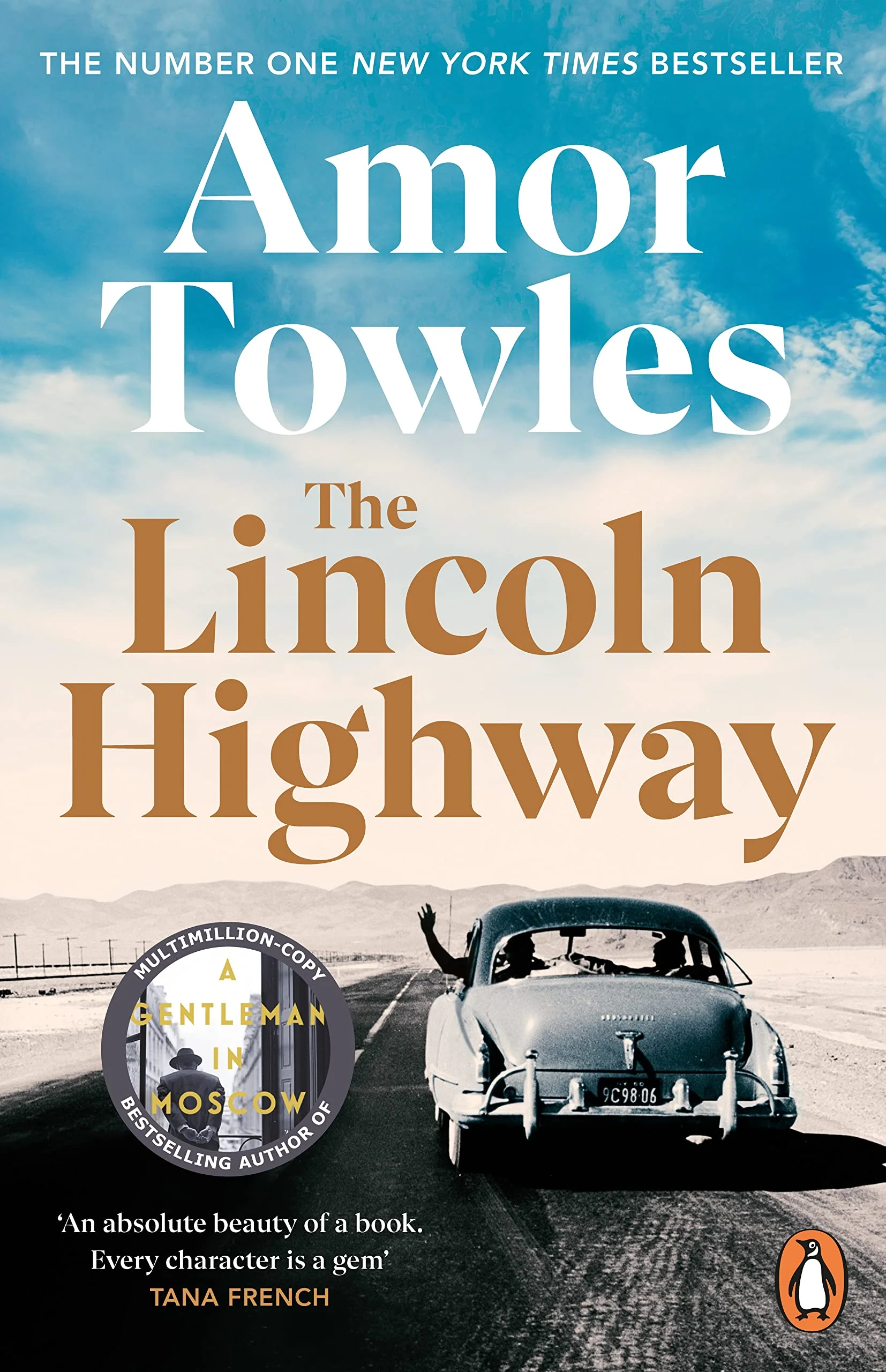
Amor Towles’s novel The Lincoln Highway has attracted wide acclaim for its ability to straddle two seemingly opposite qualities: nostalgia for a bygone era and relevance to contemporary readers. Set in 1954, the book follows eighteen-year-old Emmett Watson as he embarks on a journey across America with his younger brother Billy and two unexpected companions.
While the story unfolds within the historical landscape of mid-twentieth-century America, it feels strikingly modern in its themes, style, and emotional resonance. Towles creates a narrative that looks back fondly on a past filled with cultural touchstones while also offering insights that speak directly to twenty-first-century concerns. This duality explains why the novel has been praised as both nostalgic and contemporary.
The historical setting as a portal to nostalgia
The novel’s setting in 1954 immediately places it in a moment that evokes nostalgia for many readers. This was a time when America was undergoing transformation, balancing postwar optimism with emerging social tensions. By choosing the Lincoln Highway—one of the first transcontinental roads in the United States—as the symbolic backbone of his novel, Towles taps into the classic imagery of road trips, freedom, and the open possibilities of mid-century America. Old diners, small towns, and the rhythm of cross-country travel all contribute to a sense of longing for a simpler era when journeys felt more adventurous and less hurried by modern technology.
Characters shaped by mid-century ideals
The characters themselves carry nostalgic weight. Emmett embodies the rugged independence of a young man determined to start anew, while Billy represents innocence and wide-eyed curiosity about the world. Duchess and Woolly, the companions who join their trip, reflect archetypes familiar from mid-century narratives: the charming drifter and the eccentric dreamer. These characters feel as though they belong to the era of postwar literature and cinema, reminding readers of classic road stories, yet their personalities are layered with complexities that prevent them from becoming caricatures. They stand as both reflections of their time and timeless figures readers can still relate to today.
The myth of the American road
The very concept of a road novel carries nostalgic undertones. Since Jack Kerouac’s On the Road and earlier frontier stories, the road has symbolized freedom, self-discovery, and reinvention. By situating his narrative on the Lincoln Highway, Towles connects his characters to this larger American mythos. Readers experience a sense of longing for the wide-open landscapes and the sense of possibility that once defined the idea of travel. The book’s frequent nods to American storytelling traditions—whether through folklore, pulp adventure tales, or historical references—create layers of nostalgia that remind us of the enduring cultural fascination with the journey as metaphor.
Contemporary themes within a historical frame
While steeped in mid-century details, the novel speaks powerfully to present-day issues. Themes of reinvention, resilience, and the search for belonging resonate strongly in a world where people continue to grapple with identity and change. Emmett’s attempt to build a new life after time in a juvenile work farm mirrors modern struggles for second chances and fresh starts. Billy’s love of adventure stories mirrors contemporary fascination with storytelling as a way to make sense of an uncertain world. Duchess’s moral ambiguities and Woolly’s struggles with privilege and purpose reflect challenges that remain highly relevant. The historical backdrop becomes a lens for exploring timeless human concerns that feel current rather than distant.
A modern narrative structure
Part of the novel’s contemporary appeal lies in Towles’s narrative style. Instead of a linear road trip tale, the story unfolds through multiple perspectives, with shifting points of view and intricate narrative layering. This technique resonates with modern readers accustomed to complex storytelling in television, film, and contemporary fiction. The structure creates immediacy and engagement, ensuring the novel does not read like a traditional mid-century narrative but rather like a fresh, inventive work that belongs to the present literary landscape. Towles blends the comforts of a classic road trip novel with the stylistic sophistication that appeals to contemporary sensibilities.
Confronting nostalgia with reality
Another reason the novel feels contemporary is that Towles does not present nostalgia uncritically. While the 1950s are often remembered as an era of prosperity and simplicity, the novel acknowledges hardship, inequality, and disillusionment. The characters encounter moral dilemmas, economic struggles, and questions of justice that complicate the idyllic vision of the past. This nuanced approach resonates with today’s readers, who are often skeptical of overly romanticized portrayals of history. By confronting nostalgia with reality, Towles ensures his novel feels both authentic to its period and meaningful in modern discussions about how we remember the past.
The universal search for belonging
At its heart, The Lincoln Highway is about the universal human search for belonging and direction. Emmett and Billy are trying to find a place where they can build a home, while Duchess and Woolly are searching for meaning in their own unconventional ways. These struggles transcend time and resonate with contemporary readers who face similar uncertainties about purpose and identity. The nostalgia of the setting is balanced by the timelessness of the characters’ quests, allowing readers to connect emotionally regardless of generational perspective.
The balance of idealism and pragmatism
The novel also blends the idealism of youthful dreams with the pragmatism of adult responsibilities. Billy’s childlike optimism about reaching California and starting anew contrasts with the practical realities Emmett must confront. This tension feels both nostalgic, reminding readers of youthful dreams, and contemporary, reflecting the challenges of reconciling aspiration with reality. Towles captures the bittersweet balance between hope and limitation, a theme that resonates across eras.
Storytelling as a timeless bridge
Another reason the novel feels both nostalgic and contemporary is its emphasis on storytelling itself. Billy’s fascination with adventure tales, Woolly’s attachment to memory and tradition, and Emmett’s unfolding story all highlight the enduring power of narratives to shape identity and guide choices. For readers today, this theme resonates in a world where stories—whether in books, films, or digital media—continue to serve as tools for navigating life. Towles reminds us that storytelling connects generations, bridging nostalgia for the past with relevance in the present.
The Lincoln Highway as a mirror of then and now
Ultimately, Towles’s novel achieves its dual effect by serving as both a window into the past and a mirror for the present. It evokes nostalgia through its setting, imagery, and character archetypes, while simultaneously offering contemporary themes and narrative techniques that ensure its relevance today. The Lincoln Highway, both literal and symbolic, becomes a road that stretches across time, connecting mid-century ideals with modern concerns. By blending these elements, Towles creates a novel that feels at once rooted in history and alive with contemporary significance, inviting readers to reflect on how journeys—whether personal, cultural, or national—always bridge past and present.
A road that leads across time
The Lincoln Highway endures as both nostalgic and contemporary because it embraces duality: the longing for an America of open roads and second chances, and the recognition that these same longings continue to define modern life. Towles’s novel demonstrates that history is never sealed in the past but constantly informs how we understand ourselves today. The Lincoln Highway, both as a story and as a symbol, continues to carry travelers across time, reminding us that every journey is shaped as much by memory as by the road ahead.