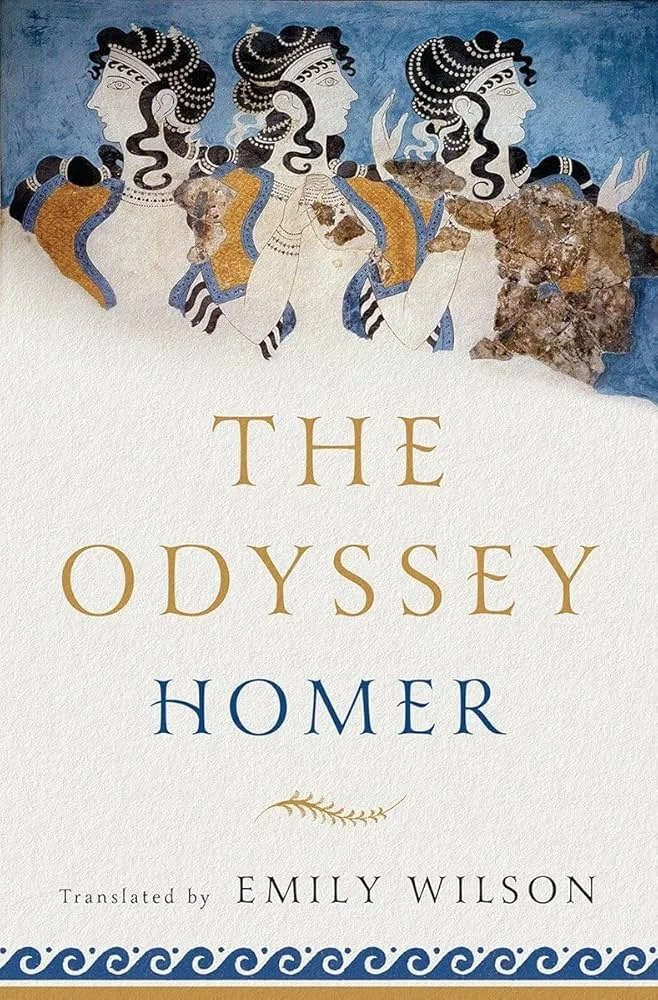
Homer’s Odyssey, composed nearly three millennia ago, remains one of the foundational texts of Western literature. It has inspired countless translations, reinterpretations, and artistic echoes across cultures. Yet when it comes to adapting the poem directly into film, directors and screenwriters consistently encounter difficulties.
While modern cinema has successfully brought to life epics such as Troy or Beowulf, the Odyssey often resists a faithful adaptation. The challenge lies not only in its length and episodic nature but also in its symbolic richness, mythological framework, and the tension between ancient values and modern audiences. Each of these factors contributes to the persistent difficulty of capturing the poem’s essence on screen.
The episodic structure
Unlike modern novels with linear plots, the Odyssey unfolds as a series of loosely connected episodes. Odysseus’s journey takes him from the Cyclops’s cave to Circe’s enchanted island, from the land of the dead to the shores of the Phaeacians. Each adventure stands as a self-contained tale, and the transitions between them are not always smooth. In literature, this episodic form allows readers to savor the variety of Odysseus’s trials. In cinema, however, audiences often expect narrative cohesion and rising tension that culminates in a climactic resolution. Filmmakers face the difficulty of condensing or selecting episodes without losing the story’s breadth, and any attempt to compress risks making the narrative feel disjointed or incomplete.
The role of the gods
The Odyssey is deeply rooted in a worldview where gods intervene directly in human affairs. Athena aids Odysseus, Poseidon punishes him, and divine will shapes the trajectory of events. Modern audiences, however, tend to view supernatural interventions differently. Including the gods too literally may feel outdated or mythological in a way that alienates viewers. Omitting them, however, erases a crucial dimension of the epic: the interplay between divine will and human agency. Filmmakers struggle to find the balance between honoring the mythological framework and making the narrative resonate with contemporary sensibilities that often prefer psychological or secular explanations for events.
The complexity of Odysseus
Odysseus is not a straightforward hero. He is clever, cunning, and resourceful, but he is also deceitful, prideful, and at times ruthless. His victories often come through trickery rather than physical strength, as with the Trojan Horse or his escape from the Cyclops. For modern film, which often favors clear-cut protagonists, Odysseus’s morally ambiguous character presents a challenge. To depict him faithfully risks alienating audiences who expect heroic virtue, but to simplify him risks flattening the very qualities that make him one of literature’s most complex figures. Capturing the tension between his brilliance and his flaws remains a central obstacle in adaptation.
The shifting timeline
Another challenge lies in the poem’s non-linear storytelling. Much of Odysseus’s journey is recounted in retrospect, as he narrates his adventures to the Phaeacians. This frame narrative allows Homer to manipulate time, blending memory and present action. In film, however, the frequent use of flashbacks can disrupt pacing and confuse viewers. Directors must decide whether to maintain the poem’s intricate structure or impose a more straightforward chronology. Either choice involves compromise: preserving the layered timeline risks narrative complexity that alienates audiences, while simplifying it risks losing the artistry of Homer’s original composition.
The problem of scale
The Odyssey spans vast distances, from Troy across the Mediterranean to Ithaca, encompassing gods, monsters, and entire kingdoms. Filming such an expansive tale requires enormous resources, advanced visual effects, and careful pacing. Yet cinema is bound by practical limits of budget and runtime. Unlike a television series that could explore each adventure in detail, a feature film would struggle to include everything without feeling rushed. Attempts to focus on one or two episodes risk diminishing the epic scope, while efforts to cover the entire journey may leave little room for emotional depth. The sheer scale of the Odyssey resists containment in a single film format.
Cultural distance and values
The Odyssey reflects values of honor, hospitality, and patriarchal authority that can appear foreign or problematic to modern audiences. Odysseus’s desire to return to his wife Penelope is central, but along the way he has prolonged stays with Calypso and Circe, which the text portrays without condemnation. Similarly, the slaughter of Penelope’s suitors, while justifiable in the ancient context of honor and retribution, may seem excessively brutal today. Filmmakers must navigate these cultural differences carefully, deciding whether to preserve the ancient values or reinterpret them for modern sensibilities. Either choice risks criticism—faithfulness to the original may seem regressive, while modernization may dilute the epic’s authenticity.
The symbolic richness
The Odyssey is not only a tale of adventure but also a meditation on homecoming, identity, and human perseverance. Each episode carries symbolic weight: the Lotus-Eaters represent the temptation of forgetfulness, the Sirens embody dangerous knowledge, and Scylla and Charybdis symbolize unavoidable dangers. Translating these symbols to film requires more than spectacle; it demands a visual language capable of conveying layered meanings. Yet film audiences often expect concrete action over allegory, making it difficult to preserve the poem’s metaphorical richness. Reducing these episodes to mere encounters with monsters risks stripping away their deeper thematic resonance.
Comparisons with successful reimaginings
Interestingly, many of the most successful adaptations of the Odyssey are indirect. James Joyce’s Ulysses reimagines the epic in the streets of Dublin, while films like the Coen Brothers’ O Brother, Where Art Thou? transpose the journey to Depression-era America. These works capture the spirit of the epic—wandering, homecoming, identity—without attempting literal fidelity. This suggests that the Odyssey thrives best when reinterpreted rather than reproduced. Direct film adaptations stumble over the very qualities that make the poem great, while looser reinterpretations succeed by capturing its themes in modern settings.
The epic that resists the screen
In the end, the difficulty of adapting the Odyssey into film reflects its nature as a text that defies reduction. Its episodic form, mythological framework, ambiguous hero, and symbolic richness resist the linear, visually oriented demands of cinema. The very qualities that have ensured the poem’s survival for nearly three thousand years—its openness, its layered meaning, its capacity to inspire endless retellings—make it ill-suited to the constraints of a single film. The Odyssey endures not as a story waiting for a definitive adaptation but as an inexhaustible source of inspiration that continues to challenge artists across mediums.